
Generation
TRON Vanity Generators: CLI, GPU and Hosted Tools
Compare generators by where keys are created, what engine they run and how their output is verified. Speed alone is not enough to assess a tool.
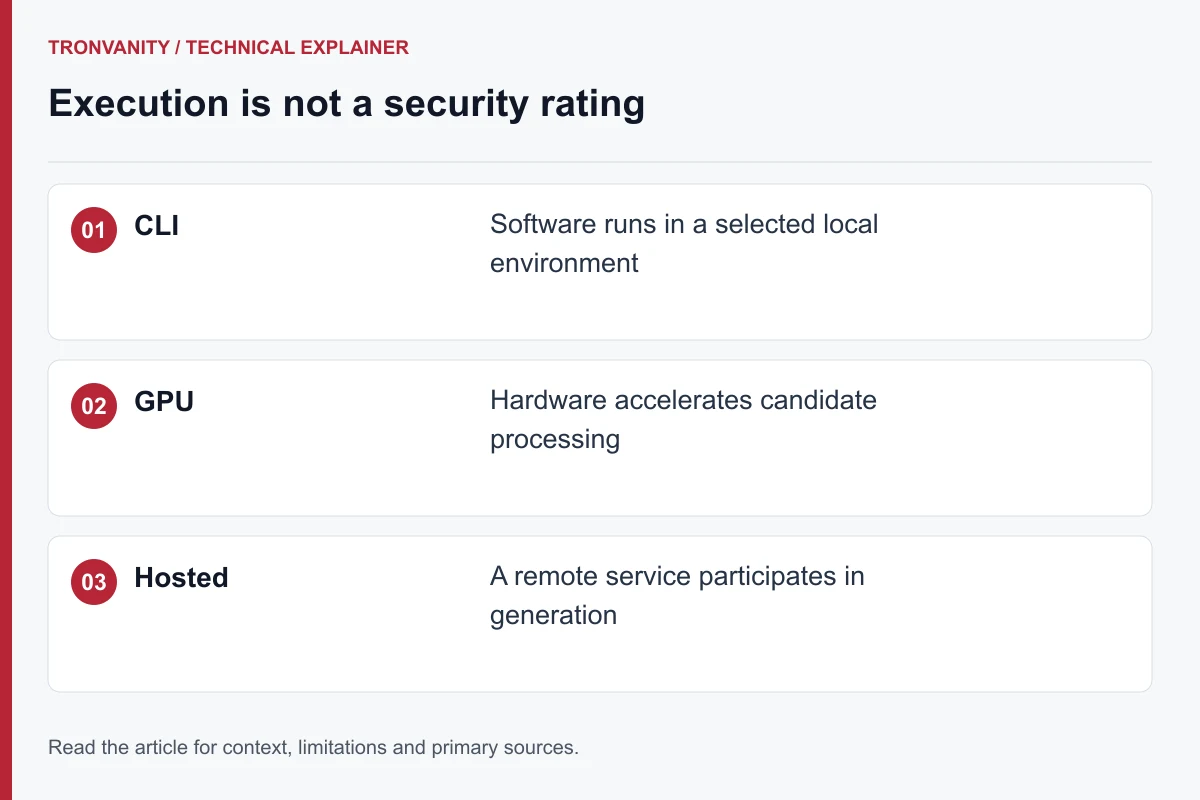
Compare the location of key creation first
A hosted tool and a local tool make different tradeoffs. Hosted generation avoids local GPU setup but places the secret on remote infrastructure. Local generation moves that execution to your own environment; it still requires trustworthy software and a secure device.
A split-key design is a separate cryptographic workflow, not a label for any tool that returns a private key. TRONVanity’s current hosted service does not provide split-key generation.
Questions to ask before comparing speed
Use a concrete checklist rather than treating a large addresses-per-second claim as evidence of safety.
| Question | Evidence to look for |
|---|---|
| Where is the private key created? | Documented execution and data flow |
| Which formats and patterns are supported? | Explicit input validation and output specification |
| Is the output independently checked? | Address derived again from the exported key |
| What can be retained? | Documented result and provider retention |
| What does the benchmark measure? | Hardware, pattern, case mode and elapsed-time definition |
How this site fits the checklist
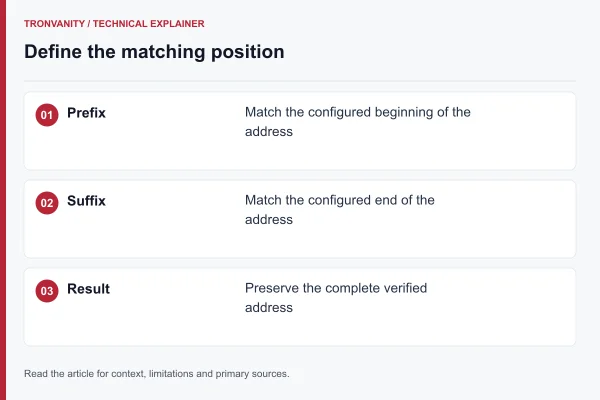
TRONVanity uses a server-side GPU worker, supports one prefix or suffix, and validates the returned key/address pair. It does not publish a universal speed guarantee or claim a third-party security certification.
Read the hosted trust model and the difference between difficulty and timing. Choose a tool whose requirements you can evaluate, rather than a ranking based on unverified marketing figures.
Explore the related mechanism
- How TRON Vanity Address Generation Works — A worker searches private keys, derives their addresses and stops when an address matches your prefix or suffix. TRON Base58Check addresses begin with T.
- Is a TRON Vanity Address Safe? — A vanity pattern is a visual preference, not a security property. The generation method and private-key handling determine the trust required.
- Open the complete workflow guide to place these checks in order.
- Open the address generator when you have chosen a compatible format and pattern.
Sources and editorial method
The technical references below support the concepts discussed in this article. Examples and comparison worksheets are explanatory, not measured service benchmarks.
Read next
Generation2 min read
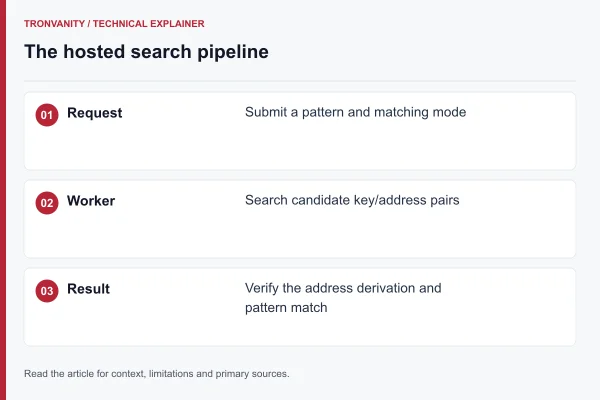
How TRON Vanity Address Generation Works
A worker searches private keys, derives their addresses and stops when an address matches your prefix or suffix. TRON Base58Check addresses begin with T.
Security2 min read
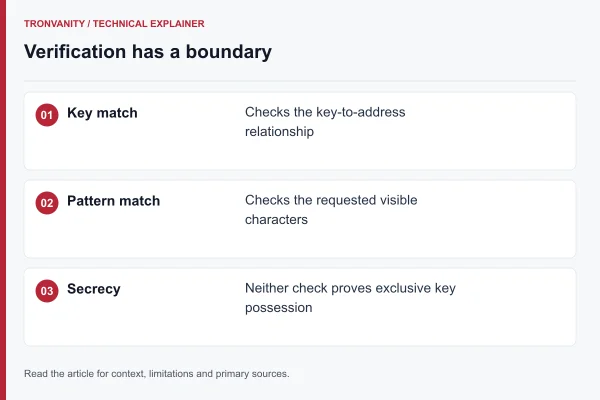
Is a TRON Vanity Address Safe?
A vanity pattern is a visual preference, not a security property. The generation method and private-key handling determine the trust required.
Generation2 min read
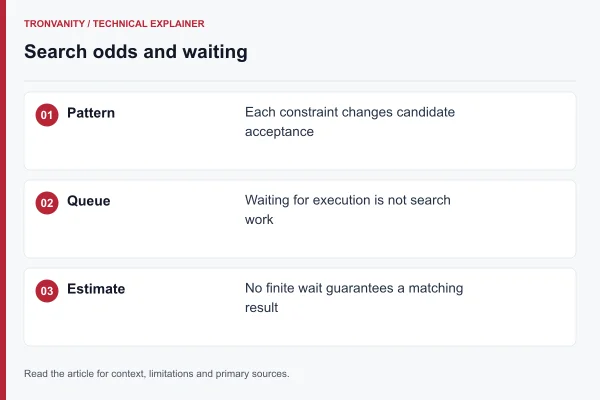
TRON Vanity Address Difficulty: Odds and Time
Longer patterns are harder to match. A search is probabilistic, so an average number of attempts is not a deadline.
Generation3 min read
TRON Vanity Address Search: Prefix, Suffix and Case Examples
Set up a TRON vanity address search: enter a prefix after T or a suffix, check Base58 characters, choose case rules and understand job status.